
Ways to Get Involved
Join our Mission
Bring your time, skills, and compassion to work that supports children, individuals, and families across our community.
Everyone has something to offer. Explore a range of opportunities at the Mental Health Association of Frederick County (MHA) that allow you to contribute in a way that feels meaningful to you.
Volunteer
Finding the volunteer opportunity that best suits your skills, availability, and expectations can make all the difference to you and your community.
Here are some of the great opportunities that MHA has available:
-
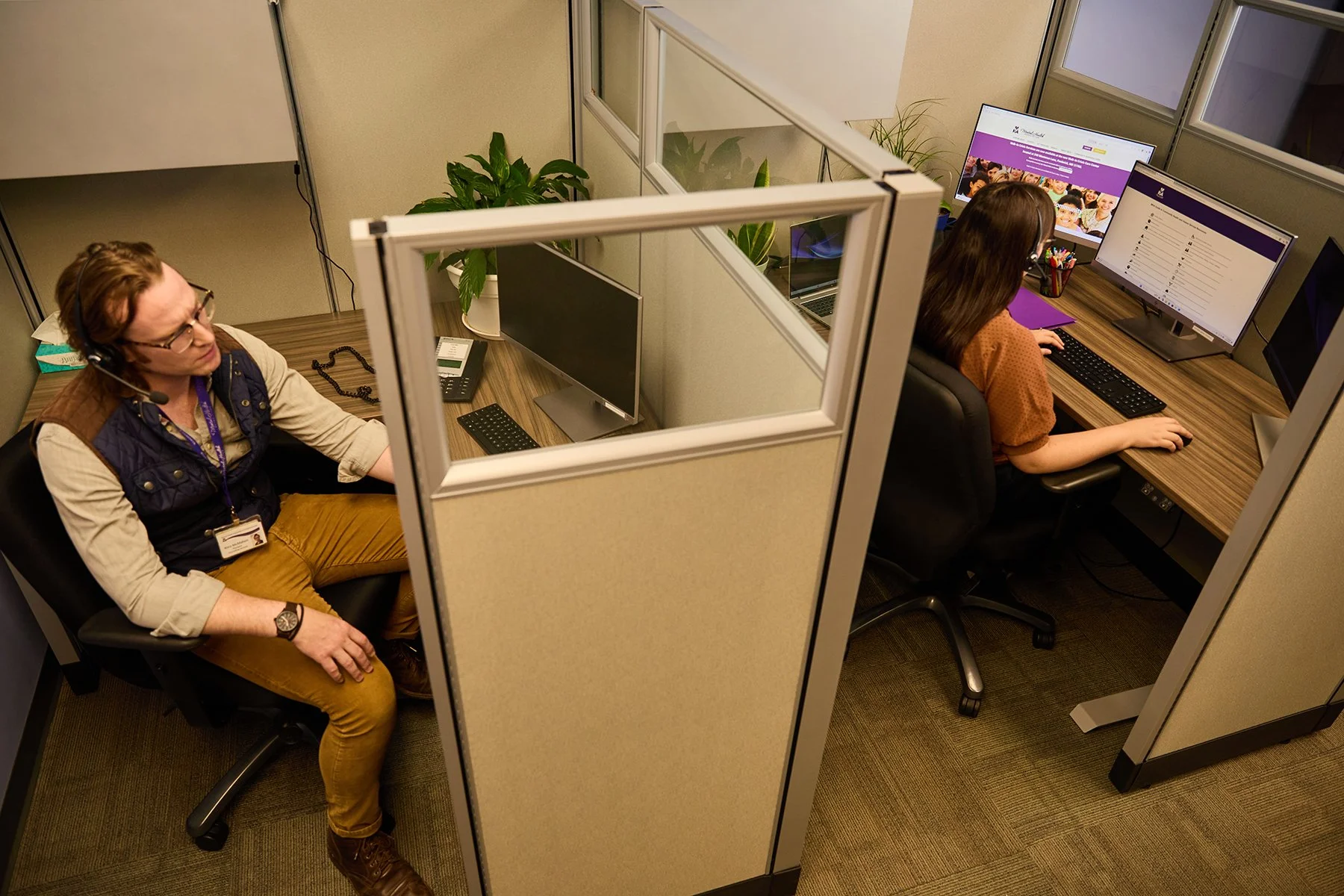
Volunteer Call Specialists support individuals in our community by offering compassionate listening, connection to resources, and support during moments of crisis. Working in MHA’s 24-Hour Call Center, volunteers help ensure that no one has to navigate challenges alone.
All volunteers receive comprehensive training, including 50 hours of instruction and 15 hours of guided apprenticeship, focused on active listening, suicide prevention, and related special topics. Ongoing support is provided to help volunteers feel prepared and confident in their role.
We ask volunteers to commit to one four-hour shift per week for one year to help maintain consistent, reliable support for those who reach out. Volunteers must be at least 18 years old.
For more information about becoming a Call Specialist, contact Latisha Carr at 301.663.0011 x120.
-
In Frederick and Carroll Counties, MHA operates Court Appointed Special Advocates (CASA) and Voices for Children. These programs recruit, train, and support citizen-volunteers to advocate for the best interests of abused and neglected children in courtrooms and communities.
Volunteer advocates—empowered directly by the courts—offer judges the critical information they need to ensure that each child’s rights and needs are respected while in foster care. Volunteers are a consistent presence in the child’s life until they find stability in a safe, loving, and permanent home. In some cases, a CASA may be the only constant adult presence in their lives, offering trust and advocacy during complex legal proceedings.
Any mature, responsible, caring, and sensitive adult, at least 21 years of age, can become a CASA. The Mental Health Association welcomes CASA volunteers from all cultural, professional, ethnic, and educational backgrounds.
A CASA volunteer must complete an extensive screening process. This includes submitting a CASA volunteer application, completing interviews, supplying a State/FBI fingerprint background check, passing the State Child Abuse/Neglect Registry background check, and providing personal references.
CASA volunteers undergo a 30-hour initial training process and must complete 12 hours of ongoing training per year.
CASA training includes the following topics:
Laws about child abuse and neglect
The court and social services systems
Family and child development
Communication skills
Cultural competency
Special needs of abused and neglected children
CASA volunteers have considerable flexibility in scheduling their interviews and telephone calls. However, the CASA must be available to attend court hearings. Over the average case involvement of one year, a CASA volunteer can expect to spend an average of two hours per week working on a case.
CASA volunteer offers a child trust and advocacy during complex legal proceedings. The CASA encourages the child to express their own opinions and hopes, while remaining an objective observer and advocating for the child’s best interests.
For more information about the CASA program in Frederick County and Carroll County, contact Jennifer Fuss at 301.663.0011 ex. 118, email jfuss@fcmha.org, or visit the National CASA website. If you are interested in becoming a Court Appointed Special Advocate (CASA) volunteer, fill out and submit the CASA Volunteer Application online here.
-
MHA’s Visitation and Transfer Services program supports children and families by creating opportunities for safe, respectful connection. We provide a structured, conflict-aware environment where children can spend time with a parent they do not live with, while supporting the development of healthy family relationships.
If you share our commitment to helping families and children, we would love to hear from you.
Visitation and Transfer Services is seeking volunteers to observe and monitor visits at our supervised visitation and monitored transfer center. Volunteers play an important role in helping create a space where children can feel safe and supported during visits.
In this role, volunteers observe interactions between parents and children, offer guidance when appropriate, and help maintain a calm, respectful environment. They step in as needed to support children’s safety, follow program guidelines, and document a summary of interactions during visits.
Volunteer requirements include:
You be at least 18 years of age
You be screened through an application and interview process
You complete an FBI criminal history check and a Child Protective Services background check
You must complete an 8-week training (1 hour a week at your best availability)
You commit to at least 4 hours per month of volunteer time (4 1-hour visits)
Visitation hours are Thursdays from 3-7 pm, Fridays from 3-7 pm, and Sundays from 10:30 am-6 pm
For more information about becoming a volunteer with the Visitation and Transfer Services program, contact 301.663.0011, ext. 147.
-
Our supporters play an important role in expanding MHA’s impact in the community. Volunteers who fundraise or advocate on our behalf help increase awareness, reduce stigma, and connect more people to the resources they deserve.
Whether you’re organizing a small event, sharing information within your networks, or creating new opportunities for community engagement, your efforts help make mental health support more visible and accessible.
If you’re interested in fundraising or serving as an ambassador for MHA’s mission, contact our main office at 301.663.0011 to get involved.

Why our Work Matters
The data is clear: mental health matters. Every day, whether we’re guiding someone through a crisis, connecting them to resources, or providing a listening ear, we’re proud to stand with our community.